
Forty years after Live Aid: bread for Ethy and Jopie
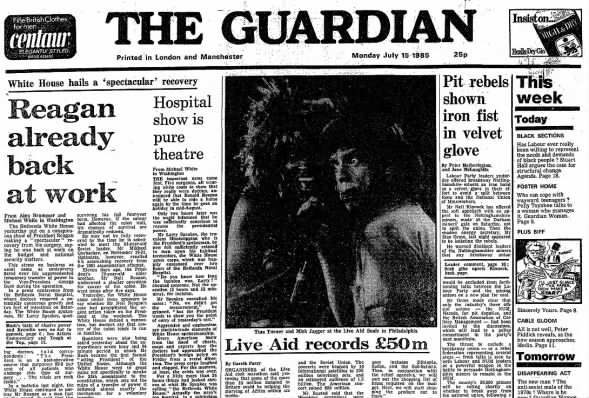
Today marks exactly forty years since Live Aid (following Band Aid) sparked a global wave of solidarity. “Do They Know It’s Christmas?” played on the radio, and the TV showed ‘hunger’ and starving children. Two massive live-shows, in London and Philadelphia to raise money for famine relief in Ethiopia.
I was still a child myself, but I remember how it felt: incomprehensible and deeply unfair. I couldn’t understand why Ethy and Jopie in my mind, giving them names, had no food (for those knowing me, that’s what I called the children I saw on a poster at school). I truly believed that if I did my best at our school’s charity run, raising pocket money, the problem would be solved. The world felt simple: someone is hungry, so you give them food.
But forty years later, I know, we know, it’s not that simple. We still live in a world where hundreds of millions of people lack the basics, food, medicine, safe shelter. And we’ve come to understand just how complex the system behind that suffering is. How political. How tied up in logistics, power, funding flows, and the choices we all make.
From emergency charity to structural change
At the time, Live Aid was revolutionary. It made giving visible, collective, and immediate. But today, we need more than visibility. We need systems that make sure no child like Ethy or Jopie falls through the cracks.
Not just emergency aid, but long-term solutions. Not just emotion, but infrastructure. And yes, in my opinion that also means looking differently at something that used to feel technical and distant: supply chains and procurement.
Procurement as a force for good
When I look at myself today, my passion in my daily work (Solvoz), providing support where we can, I see a mature version of that child who just wanted to help. Supply chains and Procurement are tools, a chance. Procurement is not neutral. I’d argue it is a moral act. Every euro we spend, on food kits, medical supplies, school materials, is a chance.
A chance to source locally.
A chance to demand transparency.
A chance to include women-led businesses and small suppliers.
A chance to make that euro work three times: for the people we serve, the local economy, and a fairer world.
We are forty years on. The need is still real. But today, we also have the knowledge, the tools, the networks to act differently. Not perfectly. But better. Let’s not leave that moral compass, the one that brought millions of people to their screens in 1985, behind in nostalgia. Let’s carry it forward. Into our budgets, our platforms, our decisions.
Not just “Do they know it’s Christmas?” But: Do we know what we’re doing with our budgets? Ethy and Jopie deserve better. And we can do better.