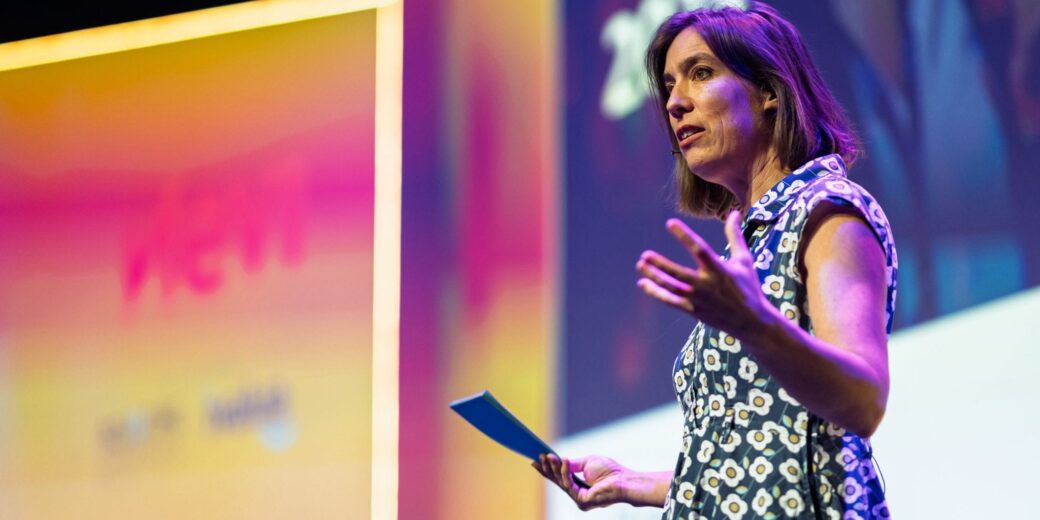
We can create the world we want to see
This January, I’m heading back to Davos. Last year, my message was simple and deliberately uncomfortable: put your money where your mouth is. If we truly believe in sustainability, resilience and inclusion, then capital, procurement decisions and market structures must reflect that belief, not just in speeches or panels, but in contracts, balance sheets and long-term commitments.
Heading to Davos 2026, World Economic Forum, my message evolved. We can create the world we want to see. But only if we are willing to open markets, redesign incentives, and take responsibility not just in our hearts, but also in our wallets.
From calling out to building
My first Davos in 2024 felt surreal. A former humanitarian logistician walking the snowy streets, suddenly surrounded by global leaders, investors, CEOs, and policymakers. I arrived with curiosity, gratitude, and a healthy dose of scepticism.
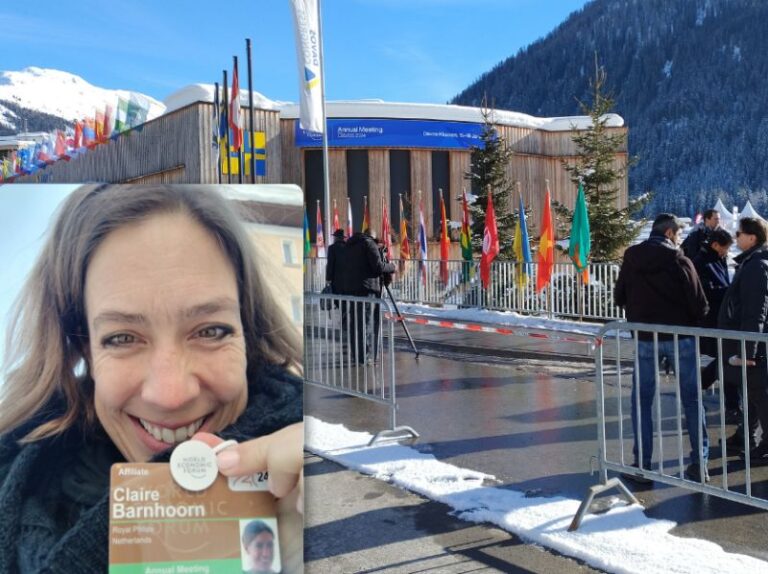
By 2025, my tone had shifted. Less wonder, more urgency. The conversations were sharper, contradictions clearer. Climate ambition on stage, but fragmented execution behind the scenes. Bold commitments, yet procurement systems and market access still rewarding the status quo.
Now, in 2026, I arrive with something different: proof. Over the past year, we have pivoted decisively with Solvoz. We moved from advocating for better procurement to building the digital market infrastructure that makes it possible at scale. From theory to execution, pilots to platforms. No longer asking why isn’t this happening? towards showing this is how it works.
Markets are not neutral
One of the most persistent myths in global development and sustainability is that markets are neutral. They are not. Markets reward what we design them to reward. If we prioritise speed and scale over fairness, local resilience and transparency, that is exactly what we get.. When powerful actors offload risk onto the weakest, inequality deepens. But the opposite is also true.
When we intentionally design markets to value proximity sourcing, sustainability attributes and long-term outcomes, behaviour changes. Capital flows differently. Innovation follows demand. Local economies strengthen. Impact stops being a side effect and becomes the core outcome. This is not idealism. It is systems thinking.
Taking responsibility, collectively
What gives me cautious optimism heading into Davos 2026 is a subtle but important shift I’ve seen over the past year. More investors asking not only what is the impact? but how is it structurally embedded? An increasing number of corporates recognise that ESG teams cannot compensate for procurement systems that optimise purely for price and speed. More public actors acknowledging that localisation is not a slogan, but a market design challenge. Responsibility is no longer only a moral question. It is becoming a strategic one.
And yet we are still too often stuck at the level of intent. Creating the world we want to see requires something harder than ambition: shared ownership. Ownership of outcomes, risks, and the systems we collectively maintain.
From rhetoric to infrastructure
If there is one lesson I keep returning to, it is this: change does not fail because of lack of goodwill, it fails because of lack of infrastructure.
You cannot ask organisations to “buy regional” if they cannot find vetted regional suppliers. You cannot ask investors to fund sustainable markets if transparency and aggregation are missing. You cannot expect accountability without systems that make accountability the default.
Over the past year, we have focused relentlessly with Solvoz on building that missing layer: market infrastructure that connects demand and supply in a way that is transparent, scalable and aligned with impact goals. Infrastructure that lowers friction for doing the right thing.
The early results matter. We have shifted spend closer to communities. Having saved time for overstretched teams. New suppliers entering formal markets for the first time. These are not headlines, but they are signals. Signals that when we open markets intentionally, behaviour will follow.
Why I go to Davos again
I am often asked why I keep coming back to Davos.
It is not because I believe the World Economic Forum is the answer. It isn’t. It is a mirror. It reflects how power, capital and influence are currently organised in the world, and that is precisely why it matters.
For one week a year, people who shape markets, investment flows, public policy and corporate behaviour are unusually close to one another. The distance between a conversation and a decision is shorter here than almost anywhere else. That makes Davos less a conference and more a pressure point in the global system.
If you care about changing how markets work, you go where markets are shaped. I don’t come to Davos to be inspired. I come to ask uncomfortable questions, to connect unlikely allies, and to see whether the bold words spoken on stages are strong enough to survive real conversations about money, risk and power. Sometimes they are. Often they aren’t. But when they are, things move fast.
An invitation, if you are around
For investors: If you are an impact or strategic investor who believes that the next wave of returns will come from owning the infrastructure behind sustainable markets, this is the moment to engage. We are raising to scale platforms that are already live, revenue-generating, and opening new markets across health, humanitarian, climate and energy.
For corporates and anchor buyers: If you run procurement, supply chains, sustainability, energy transition, healthcare access or large-scale sourcing and you know that your organisation needs its own trusted market rather than another dashboard, we are already building white-label marketplaces for exactly that purpose.
For ecosystem builders and industry leaders: If you are shaping an industry, a regional supply chain, or a public-private initiative and need a neutral market layer to connect buyers, suppliers and capital, we should be talking. This is how sectors move, not just companies.
For policymakers and funders: If you are looking for ways to turn localisation, sustainability and resilience from policy into practice, let’s discuss how market infrastructure can become a public good rather than a bottleneck.
The world we want is not waiting for permission. We are building it, market by market, through systems that make doing the right thing easier than doing the wrong one. We do not need more pledges. We need better plumbing.
This year in Davos, my message is simple: the tools exist, we can open markets and we can design responsibility into systems. The only real question is whether we are willing to act on what we already know.
I will be there to build with those who are ready.